Abu Dhabi, UAE / Geneva, Switzerland: Despite renewable energy installations reaching record highs, global employment in the sector showed its first notable slowdown, growing by just 2.3% in 2024 to reach 16.6 million jobs, according to the newly released Renewable Energy and Jobs – Annual Review 2025 by the International Renewable Energy Agency (IRENA) and the International Labour Organization (ILO).
The report attributes the deceleration in job growth to rising geopolitical and geoeconomic tensions, alongside increasing automation across renewable energy value chains, even as global deployment of clean energy technologies continues to accelerate.
As in previous years, renewable energy employment remains highly uneven across regions. China continues to dominate both renewable energy deployment and manufacturing, supported by large-scale, integrated supply chains that deliver equipment at highly competitive prices. In 2024, China accounted for an estimated 7.3 million renewable energy jobs, representing 44% of the global total.
The European Union followed with 1.8 million jobs, unchanged from 2023. Brazil recorded 1.4 million jobs, while employment growth in India and the United States remained modest, rising to 1.3 million and 1.1 million jobs, respectively.
Commenting on the findings, IRENA Director-General Francesco La Camera said, “Renewable energy deployment is booming, but the human dimension of the transition is just as critical as the technological one. Governments must place people at the centre of energy and climate strategies through trade and industrial policies that stimulate investment, build domestic capacity and develop skilled workforces. Persistent geographical imbalances underscore the need to reinvigorate international cooperation to ensure that the socio-economic benefits of the transition are shared more equitably.”
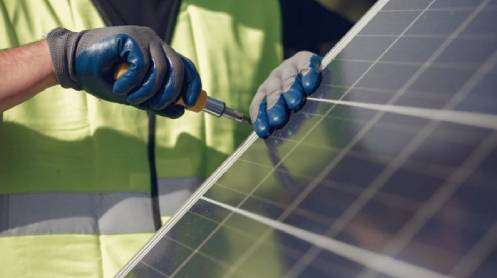
By technology, solar photovoltaics (PV) remained the largest employer, driven by continued expansion of installations and manufacturing facilities. The sector employed 7.3 million people in 2024, with Asia hosting 75% of global PV jobs. China alone accounted for 4.2 million of these positions.
Liquid biofuels ranked second, generating 2.6 million jobs, nearly 47% of which were in Asia. Hydropower followed with 2.3 million jobs, while the wind energy sector employed 1.9 million people worldwide.
Beyond employment figures, the report places strong emphasis on equity and inclusion in the renewable energy workforce. It stresses that a just transition must ensure that no groups—particularly women and persons with disabilities—are left behind. Despite their skills and potential, both groups remain significantly underrepresented across the sector.
ILO Director-General Gilbert F. Houngbo underscored the importance of inclusive labour markets, stating, “A just transition to a renewables-based future must be grounded in inclusion, dignity and equal opportunity. Ensuring accessibility for persons with disabilities across education, training, hiring and workplace design is not only a matter of social justice, but a prerequisite for resilient labour markets and sustainable development.”
The report calls for comprehensive and inclusive policy frameworks, including accessible education and training systems, inclusive labour market services and the elimination of discriminatory practices and outdated social norms. It emphasizes that all stakeholders—especially marginalized groups—must be actively involved in shaping policies for the energy transition to deliver broad-based economic prosperity.
The 12th edition of the Annual Review forms part of IRENA’s ongoing analytical work on the socio-economic impacts of renewable energy, and marks the fifth consecutive collaboration with the ILO, which contributed a dedicated chapter on the inclusion of persons with disabilities in the world of work.